Author Archives: superadmin-pantaipremier

Cancer & Precision Medicine

Cancer & Precision Medicine

Thousands of Malaysians are devastated by the news of cancer or other dreaded diseases every year. The news of cancer is always shattering and can be emotionally draining not just for the patient, but also for those around them.

Genetic Changes & Cancer

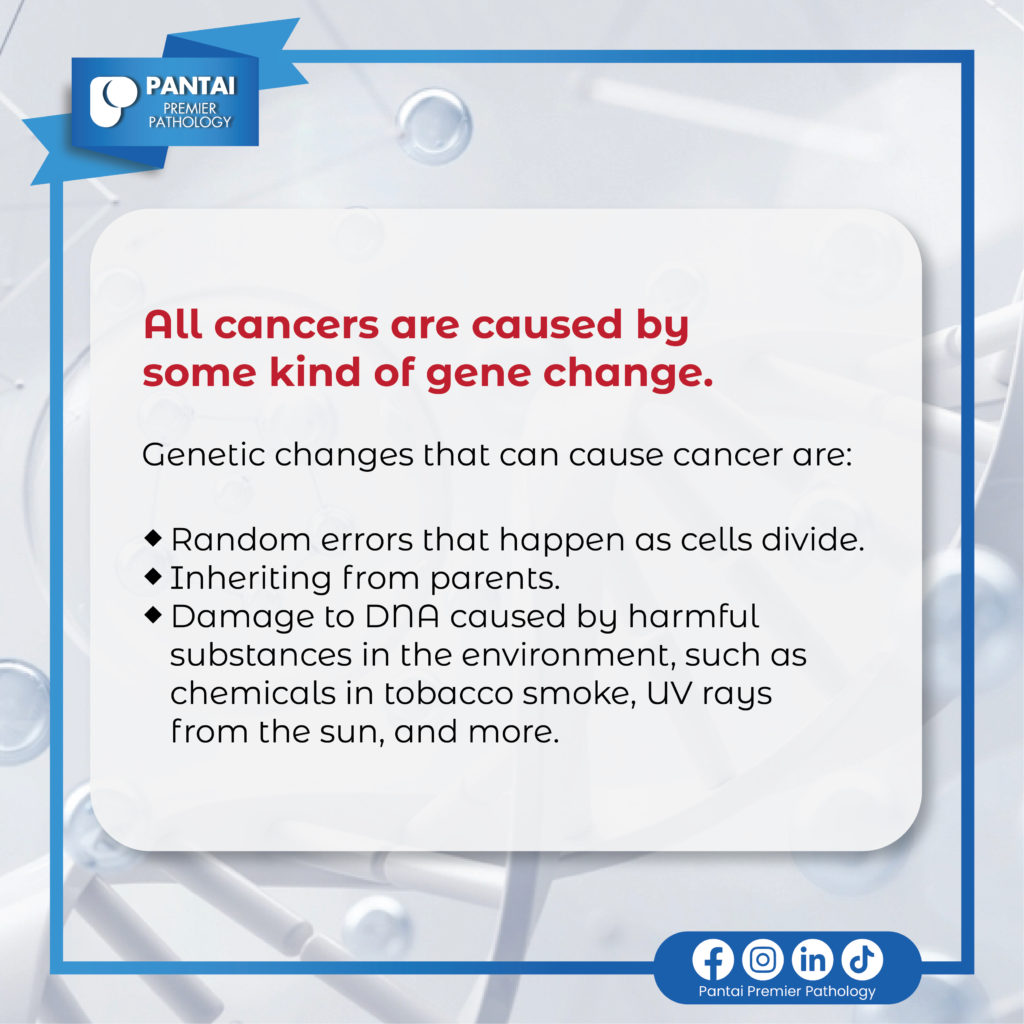
All cancers are caused by some kind of gene change. Cancer cells are abnormal versions of normal cells, which means that a change in a normal cell’s genes causes it to become a cancer cell.1

Genetic changes that can cause cancer to occur are2, 3:

  • Random errors that happen as cells divide.
  • Inheriting from parents.
  • Damage to DNA caused by harmful substances in the environment, such as chemicals in tobacco smoke, UV rays from the sun, and more.

Diagnosis: How Do People Know They Have Cancer

Cancer is often found when people experience various symptoms that don’t go away or get worse. This may be a warning sign and may need to be investigated further. Your doctor will use a range of tests to diagnose your cancer.

If it is cancer, there are chances to have it treated early, when treatment is more successful.4

Precision Medicine

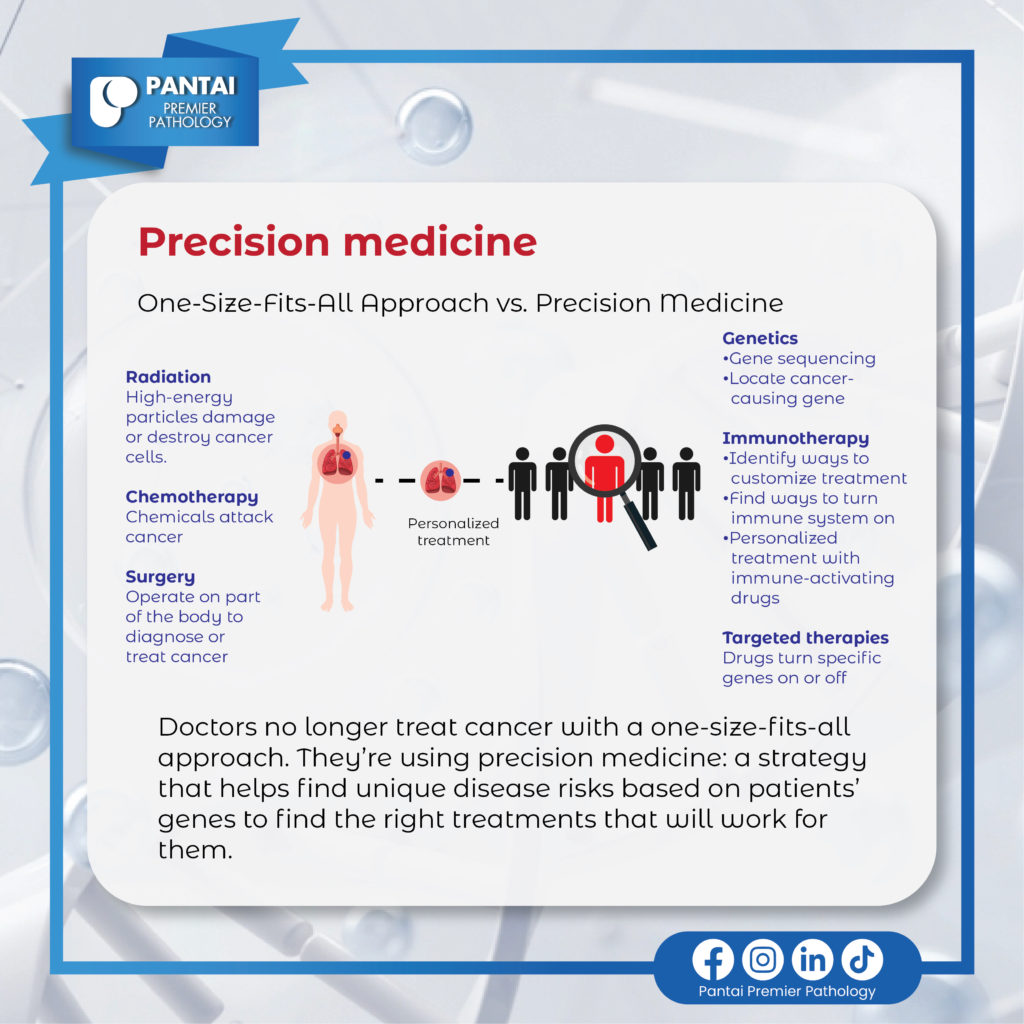
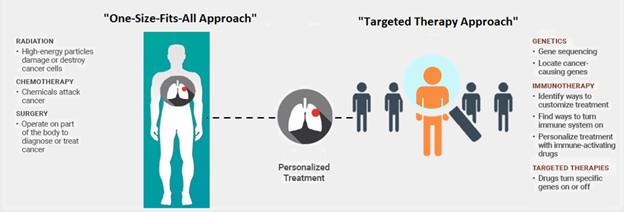
Doctors are no longer treating cancer with a one-size-fits-all approach. They’re using precision medicine also called personalized medicine: a strategy that helps find unique disease risks based on patients’ genes to find the right treatments that will work for them.5

With regard to cancer, doctors can now use precision medicine to diagnose and make treatment decisions based on specific information about a patient’s tumor from their own genes. This involves testing DNA from patients’ tumors to identify the mutations or other genetic changes that drive their cancer and select a treatment for that particular cancer that targets the culprit mutations in the tumor DNA.6

As these “targeted therapy approach” specifically target cancer cells that are different from normal body cells, this makes them less likely to be toxic to patients when compared to other treatments that can kill normal cells, such as radiation and chemotherapy.7
Precision Medicine in Healthcare

Precision medicine represents the future of patient care, as we move from intervention-based healthcare to preventive healthcare. Using a precision medicine approach, medical recommendations and a clinical action plan can help address and reduce your cancer risk.

Some common cancer tests that can help your specialists make informed decisions that can be done at PPP are Breast, Lung, Colon, Ovarian and more.


For more information on the tests provided, please contact us at +603-42809115 (Customer Service) or email us at info@premierpathology.com.my.

References

1- Precision or Personalized Medicine | Precision Medicine for Cancer. (n.d.). https://www.cancer.org/treatment/treatments-and-side-effects/treatment-types/precision-medicine.html

2- What Is Cancer? (2021, October 11). National Cancer Institute. https://www.cancer.gov/about-cancer/understanding/what-is-cancer

3- The Genetics of Cancer. (2022, August 17). National Cancer Institute. https://www.cancer.gov/about-cancer/causes-prevention/genetics

4- Signs and Symptoms of Cancer | Do I Have Cancer? (n.d.). https://www.cancer.org/treatment/understanding-your-diagnosis/signs-and-symptoms-of-cancer.html

5- Precision health: Improving health for each of us and all of us | CDC. (n.d.). https://www.cdc.gov/genomics/about/precision_med.htm  

6- Precision or Personalized Medicine | Precision Medicine for Cancer. (n.d.-b). https://www.cancer.org/treatment/treatments-and-side-effects/treatment-types/precision-medicine.html

7- Cancer genome research and precision medicine. (2017, May 3). National Cancer Institute. https://www.cancer.gov/about-nci/organization/ccg/cancer-genomics-overview
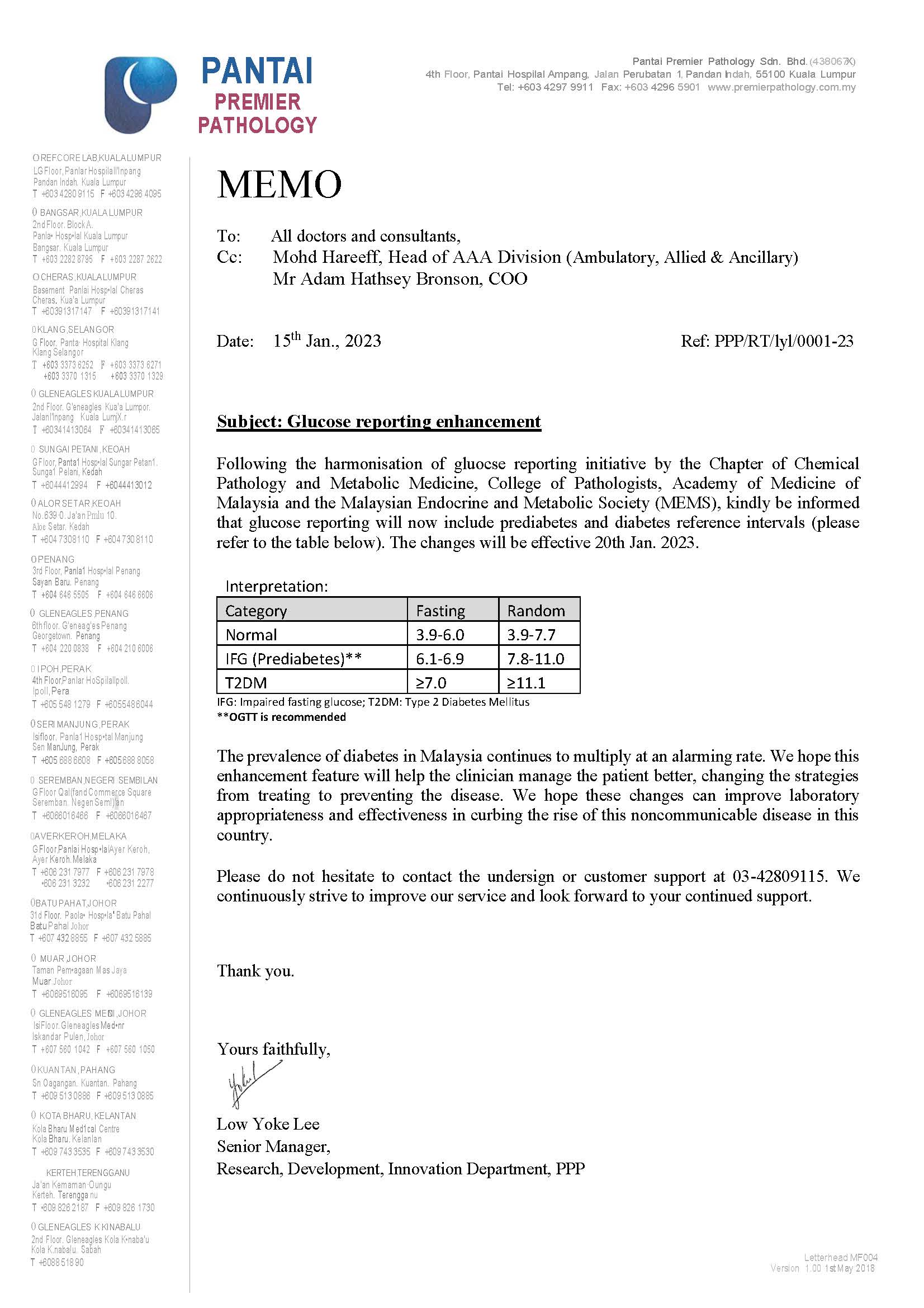

Memo on Glucose Reporting Enhancement

Memo on Glucose Reporting Enhancement

Following the harmonisation of glucose reporting initiative by the Chapter of Chemical Pathology and Metabolic Medicine, College of Pathologists, Academy of Medicine of Malaysia and the Malaysian Endocrine and Metabolic Society (MEMS), kindly be informed that glucose reporting will now include prediabetes and diabetes reference intervals (please refer to the memo below).

The changes will be effective 20th January 2023.

PPP Year End Health Screening Promotion

PPP Year End Health Screening Promotion

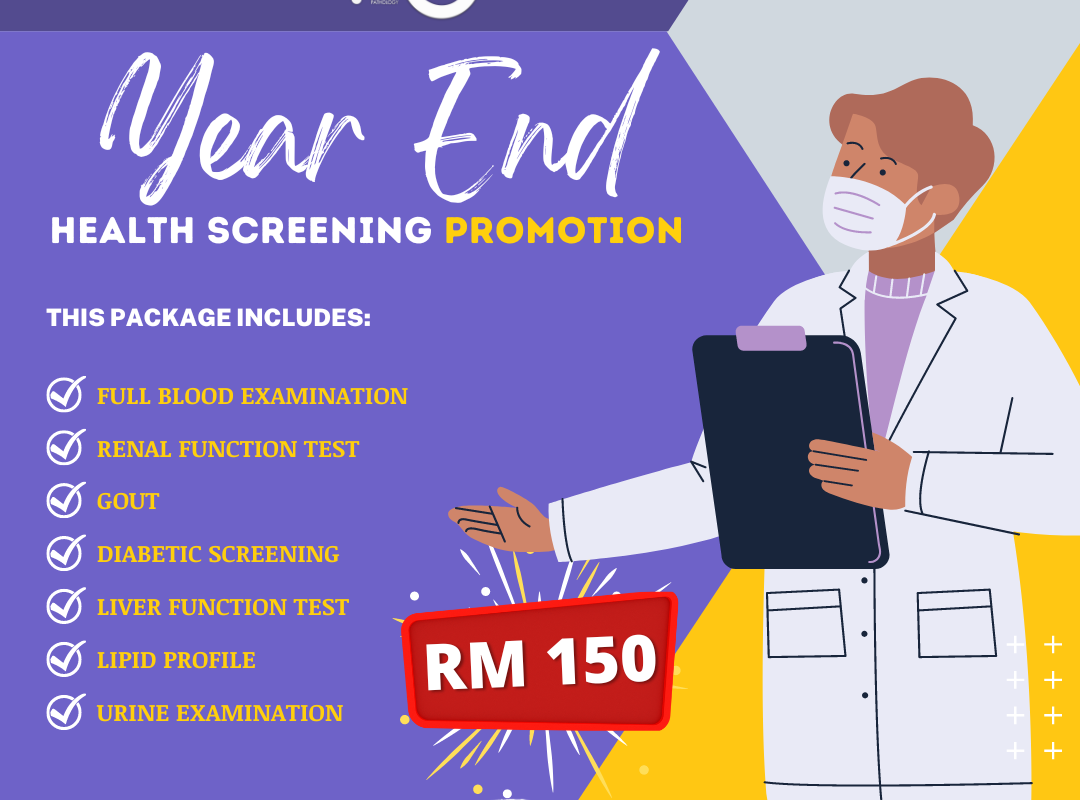
Promotion Period: EXTENDED until 31st January 2023!

Price: RM150


Where can you get the Promo Code?

The Promo Code posters are available on Pantai Premier Pathology’s official Facebook and Instagram pages.

Please click the below link to access the official page of Pantai Premier Pathology:

Facebook

Instagram


How to redeem this promo code promotion?

  1. Please walk-in to any Pantai Premier Pathology lab branches (Only redeemable at Pantai Hospitals branch, Gleneagles Hospitals branch are excluded). Please refer the Pantai Premier Pathology branches HERE.
  2. Please show the poster with the Promo Code to the lab frontline staff during registration.
  3. You will be tested for General Wellness Screening Profile tests.
  4. Lab result and wellness report will be emailed to the patient (Patient’s email address to be shared prior registration)
  5. Patient will receive a Free Consultation Voucher.
  6. Patient can go to any PMCare panel clinic for Free Consultation voucher redemption, before the expiry date.


What are the tests included in the package?

  1. Full Blood Examination

(Help diagnose various conditions such as anaemia, infection, inflammation, bleeding disorder or leukaemia)

  • Red Blood Cells (RBC)
  • Haemoglobin (Hb)
  • Platelet Count
  • White Blood Cells (WBC)
  • Differential Count (DC)
  • Peripheral Blood Film (PBF)
  • Erythrocyte Sedimentation Rate (ESR)


  1. Renal Function Test

(To evaluate how well the kidneys are working)

  • Urea
  • Sodium
  • Potassium
  • Chloride
  • Creatinine
  • Estimated – GFR (CKD-EPI)
  • Calcium
  • Phosphate


  1. Gout

(To measure the levels of uric acid and creatinine in blood)

  • Uric Acid


  1. Diabetic Screening

(To diagnose and manage diabetes patient)

  • Glucose


  1. Liver Function Test

(To help diagnose and monitor liver disease or damage)

  • Total Protein
  • Albumin
  • Globulin
  • Albumin / Globulin Ratio
  • Total Bilirubin
  • Alkaline Phosphatase (ALP)
  • Alanine Transaminase (ALT / SGPT)
  • Aspartate Transaminase (AST / SGOT)
  • Gamma-Glutamyl Transferase (GGT)
  • Fibrosis 4 (FIB4)


  1. Lipid Profile

(To assess the risk of developing cardiovascular disease (CVD))

  • Total Cholesterol
  • HDL Cholesterol
  • LDL Cholesterol
  • Triglycerides
  • Total Chol/HDL Ratio


  1. Urine Examination

(Investigation of renal and urinary tract disease and renal involvement in systematic disease)

  • Urine FEME


Wellness report included in the package!

Breast Cancer: Risk Factors, Staging and Advanced Breast Cancer Subtypes

Breast Cancer: Risk Factors, Staging and Advanced Breast Cancer Subtypes

It’s PINKtober! October is an annual breast cancer awareness month, an annual campaign to raise awareness on the impact of breast cancer which aims to prevent breast cancer-related deaths in women across the world.

Breast Cancer in Malaysia

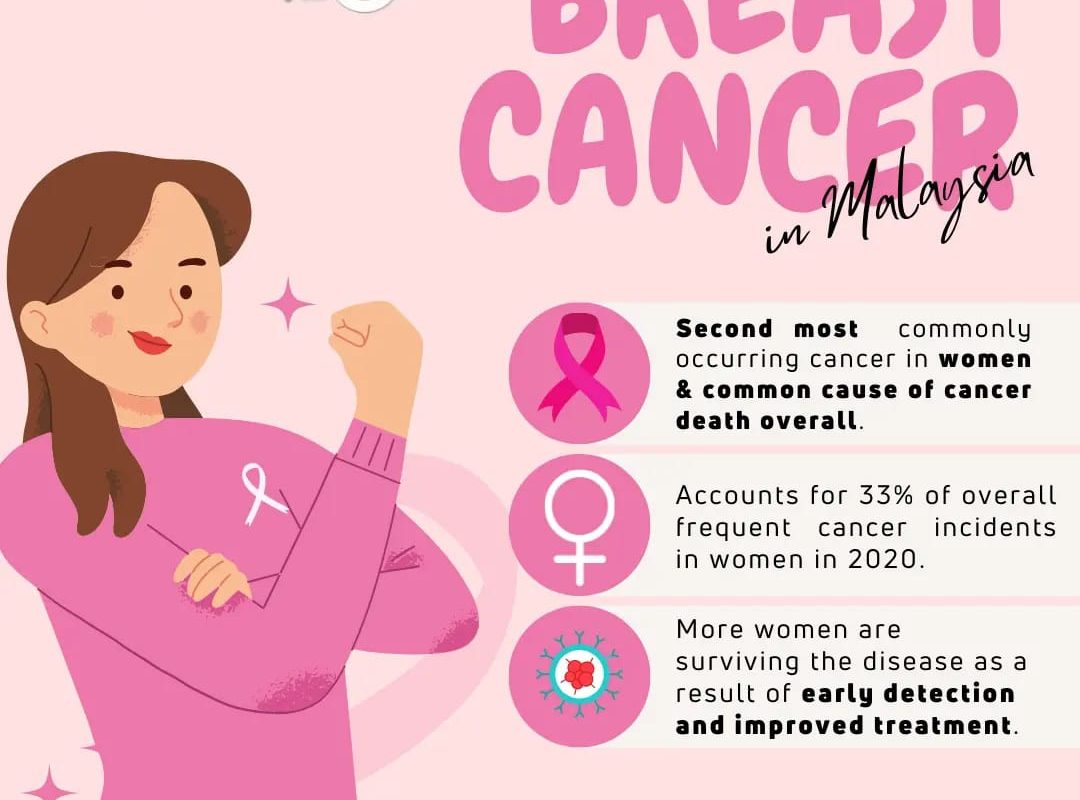
In Malaysia, breast cancer is the most commonly occurring cancer in women and the second most common cause of cancer death overall. It accounts for close to 33 percent of the overall frequent cancer incidents in women in 2020. The risk of breast cancer increases with age.1 The good news is that more women are surviving the disease as a result of early detection and improved treatment.


Why does one get breast cancer?

The causes of breast cancer are not fully understood and no one knows for certain why one may develop the disease. However, several risk factors affect the likelihood of developing the disease.2


Risk factors include:

Aging Being on hormone replacement therapy (HRT)
Family History Being overweight or obese
Previous breast cancer or lump Drinking too much alcohol
Dense breast tissue


Breast Cancer Staging

When someone is diagnosed with breast cancer, doctors will assess to determine if cancer has spread and to what extent. This process is called staging. The stage of cancer determines how severe the cancer is and how best to treat it.3

Doctors may refer to Stage 1 cancer as “early stage” and Stage II to Stage III as “locally advanced”.4 Stage IV is the most “advanced stage” of breast cancer also known as advanced breast cancer (aBC) as it spreads (metastasizes) from its original location in the breast, past the nearby lymph nodes, to other body organs. About 30% of women diagnosed with early-stage breast cancer will develop metastatic disease.5


Advanced Breast Cancer (aBC) Subtypes

Luminal A Triple Negative Luminal B HER2-enriched
73% of all breast cancer cases 13% of all breast cancer cases 10% of all breast cancer cases 5% of all breast cancer cases
HR+/HER2- HR-/HER2- HR+/HER2+ HR-/HER2+


HR = Hormone Receptor

HR + means tumor cells have receptors for the hormones estrogen or progesterone, which can promote the growth of HR+ tumors.


HER2 = Human epidermal growth factor receptor

HER2 + means tumor cells overexpress (produce high levels of) a protein, called HER2/neu, which has been shown to be associated with certain aggressive types of breast cancer.


Know Your Subtype

Knowing your breast cancer subtype can help determine your treatment and predict survival. Your doctor may perform laboratory tests such as biomarker testing to determine your subtype. A biomarker may be found or measured by testing blood (plasma) or tissue. It helps your doctor know which treatments might work best for that specific cancer type by:

Guiding treatment decisions

Predicting how the cancer may respond to treatment

Determining how cell treatment is working

Signaling if the cancer is returning

In PINKtober, we aim to create widespread awareness on breast cancer so that the disease can be diagnosed and treated at early stages.

Treatment recommendations are tailored and personalized and depend on several factors such as the stage of the tumor, tumor’s subtype, genomic markers, patient’s age, menopausal status, and the presence of BRCA1 or BRCA2 mutations. Some tests for breast cancer that can help your specialists make informed decisions that can be done at PPP are BRCA1&2, HER2 FISH, Homologous Recombinant Repair (HRR), PIK3CA Test and more.


For more information on the tests provided, please contact us at +603-42809115 (Customer Service) or email us at info@premierpathology.com.my


References

1- International Agency for Research on Cancer. (2020). Malaysia. [Fact Sheet]. World Health Organization (WHO)  https://gco.iarc.fr/today/data/factsheets/populations/458-malaysia-fact-sheets.pdf

2- NHS website. (2022, June 1). Causes. nhs.uk. https://www.nhs.uk/conditions/breast-cancer/causes/

3- Stages of Breast Cancer | Understand Breast Cancer Staging. (n.d.). Retrieved October 25, 2022, from https://www.cancer.org/cancer/breast-cancer/understanding-a-breast-cancer-diagnosis/stages-of-breast-cancer.html

4- Breast Cancer – Stages. (2022, May 24). Cancer.Net. https://www.cancer.net/cancer-types/breast-cancer/stages

5- Metastatic Breast Cancer. (n.d.). Retrieved October 25, 2022, from https://www.breastcancer.org/types/metastatic