Author Archives: superadmin-pantaipremier

Hepatitis C: Know the facts

Hepatitis C: Know the facts

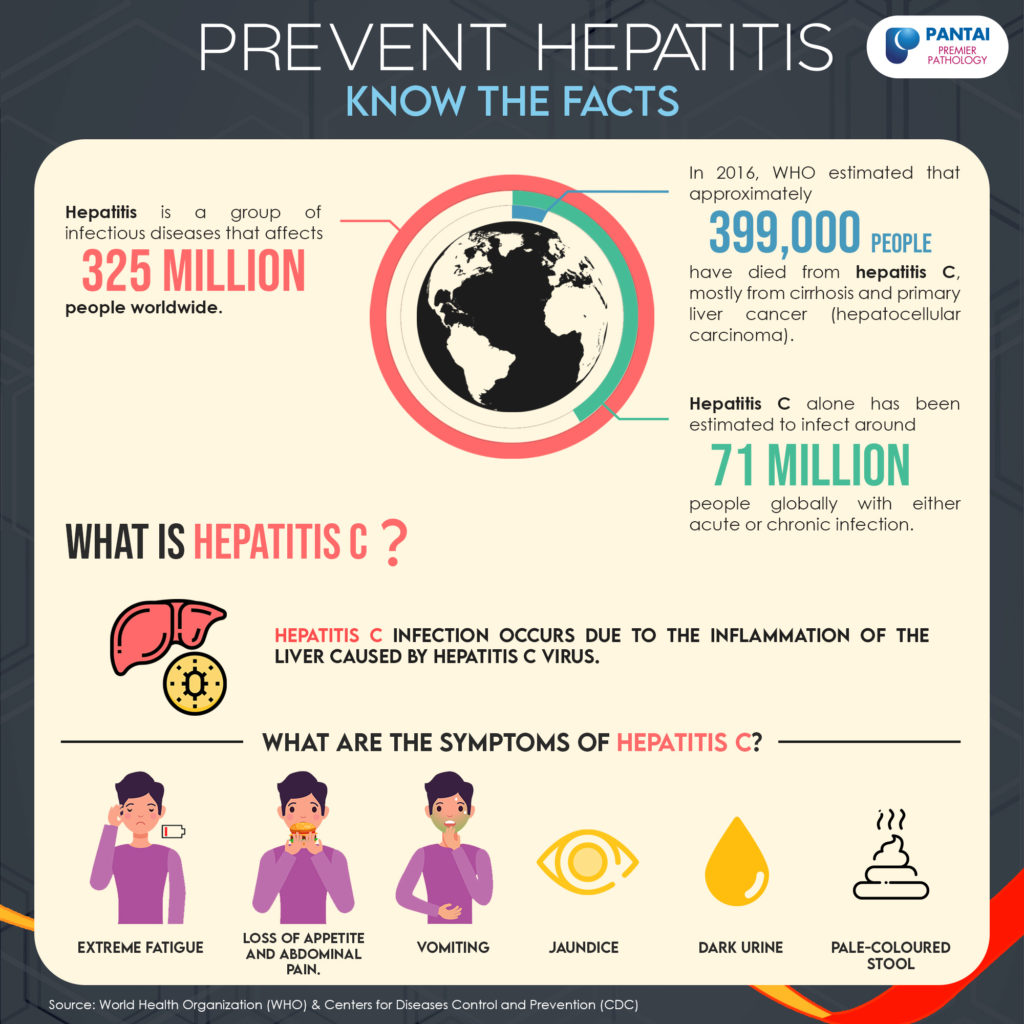
Hepatitis is a group of infectious diseases that affects 325 million people worldwide. Hepatitis C alone has been estimated to infect around 71 million people globally with either acute or chronic infection. Most individuals that have chronic infection will develop cirrhosis or liver cancer.2, 3, 5, 6 In 2016, WHO estimated that approximately 399,000 people have died from hepatitis C, mostly from cirrhosis and primary liver cancer (hepatocellular carcinoma).1


What is Hepatitis C?

Hepatitis C infection occurs due to the inflammation of the liver caused by hepatitis C virus.3


What are the symptoms of Hepatitis C?

Individuals infected with hepatitis C are usually unaware that they are infected as it occurs with minimal to no clinical symptoms and are non-specific in most cases.7

When symptoms are present, they include extreme fatigue, jaundice, vomiting, dark urine, pale-coloured stool, loss of appetite and abdominal pain.1


What causes Hepatitis C?

Hepatitis holds a great concern due to the burden of death it causes and its potential of causing an outbreak and epidemic spread.

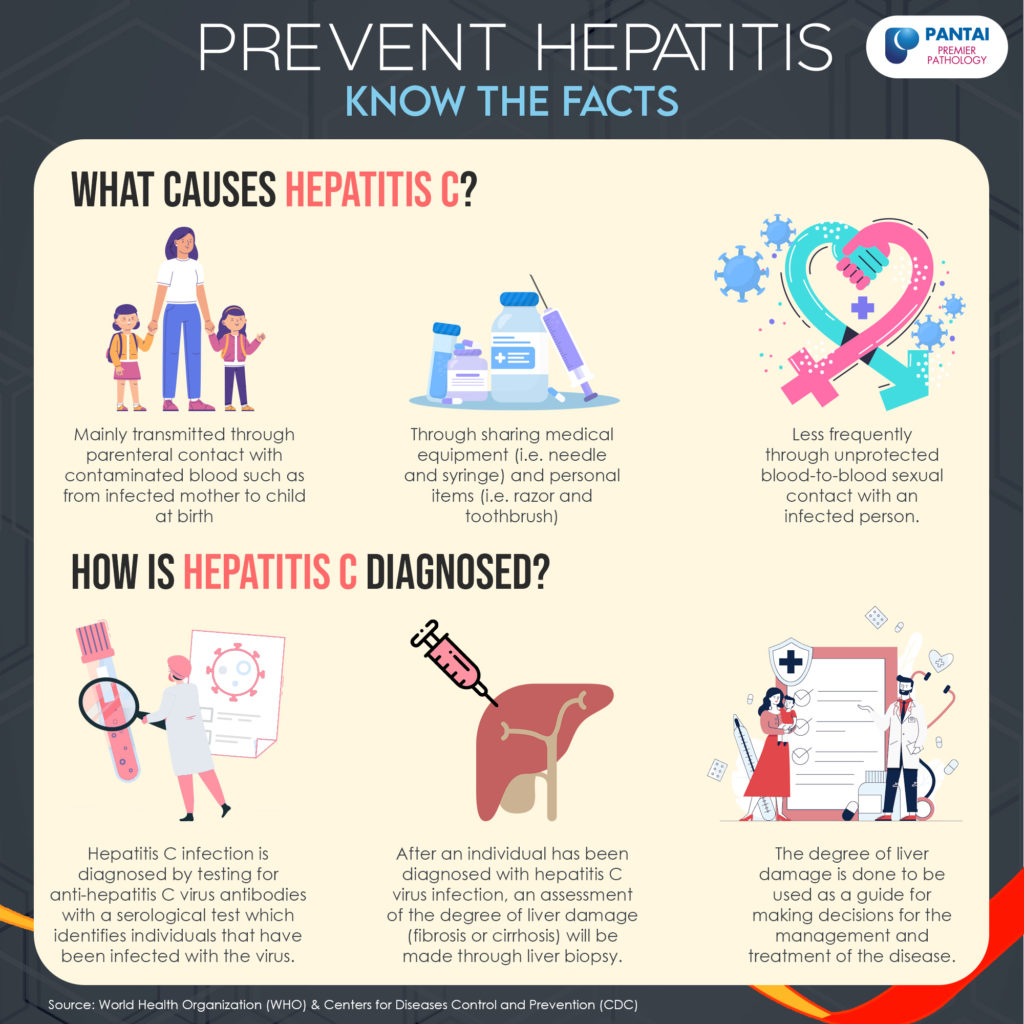
Hepatitis C is mainly transmitted through parenteral contact with contaminated blood such as from infected mother to child at birth, through sharing medical equipment (i.e. needle and syringe) and personal items (i.e. razor and toothbrush) and less frequently through unprotected blood-to-blood sexual contact with an infected person.1, 3, 5, 6, 7, 8


Who gets Hepatitis C?

Individuals at risk of hepatitis C are those in the healthcare profession, having multiple sexual partners and intravenous drug abusers.1, 8

Most cases are due to unknown origin which means an individual does not need to be included in a high-risk group in order to be infected with a hepatitis virus.


How is Hepatitis C diagnosed?

Since hepatitis C infection is usually asymptomatic, very few individuals are diagnosed and may have developed chronic hepatitis C infection which can lead to serious health problems including secondary to serious liver damage. Hence, it is important for an individual to do early screening to prevent the advancement of the disease.1, 3

Hepatitis C infection is diagnosed by testing for anti-hepatitis C virus antibodies with a serological test which identifies individuals that have been infected with the virus.

After an individual has been diagnosed with hepatitis C virus infection, an assessment of the degree of liver damage (fibrosis or cirrhosis) will be made through liver biopsy.1

The degree of liver damage is done to be used as a guide for making decisions for the management and treatment of the disease.1


In conclusion, hepatitis C infection is preventable, treatable and curable. Most individuals affected either lack prevention, testing or treatment.1 Hence, early screening and detection is an important step to prevent the progression to chronic infection (cirrhosis or liver cancer) and to reduce liver-related morbidity and mortality.6


Source:

  1. Hepatitis C. (2017, July 9). World Health Organization. https://www.who.int/news-room/fact-sheets/detail/hepatitis-c
  2. World Hepatitis Day 2019. (n.d.-a). World Health Organization. Retrieved July 24, 2020, from https://www.who.int/campaigns/world-hepatitis-day/2019
  3. What is Viral Hepatitis? (n.d.). Centers for Disease Control and Prevention. Retrieved July 24, 2020, from https://www.cdc.gov/hepatitis/abc/index.htm
  4. World Hepatitis Day — July 28th. (n.d.). Centers for Disease Control and Prevention. Retrieved July 24, 2020, from https://www.cdc.gov/hepatitis/awareness/worldhepday.htm
  5. (İskender, G., Mert, D., Çeken, S., Bahçecitapar, M., Yenigün, A., & Ertek, M. (2020). Hepatitis C screening and referral for further investigation and treatment in a tertiary care hospital. The Journal of Infection in Developing Countries, 14(06), 642-646.
  6. Guss, D., Sherigar, J., Rosen, P., & Mohanty, S. R. (2018). Diagnosis and management of hepatitis C infection in primary care settings. Journal of general internal medicine, 33(4), 551-557.
  7. Mohd Suan, M. A., Said, S. M., Lim, P. Y., Azman, A. Z. F., & Abu Hassan, M. R. (2019). Risk factors for hepatitis C infection among adult patients in Kedah state, Malaysia: A case–control study. PloS one, 14(10), e0224459.
  8. Ghany, M. G., Strader, D. B., Thomas, D. L., & Seeff, L. B. (2009). Diagnosis, management, and treatment of hepatitis C: an update. Hepatology, 49(4), 1335-1374.

COVID-19 & Non-Communicable Diseases (NCDs)

COVID-19 & Non-Communicable Diseases (NCDs)

NCD (Non Communicable Disease)

Noncommunicable diseases (NCDs), also known as chronic diseases, tend to be of long duration and are the result of a combination of genetic, physiological, environmental and behaviours factors.

Risk Factors

  • Smoking
  • physical inactivity
  • unhealthy diet
  • harmful use of alcohol
  • overweight/obesity

Who is at Risk?

People of all age groups, regions and countries are affected by NCDs. These conditions are often associated with older age groups, but evidence shows that 15 million of all deaths attributed to NCDs occur between the ages of 30 and 69 years.

NCD Statistics

  • Noncommunicable diseases (NCDs) kill 41 million people each year, equivalent to 71% of all deaths globally.
  • Cardiovascular diseases account for most NCD deaths, or 17.9 million people annually.
  • According to 2015 National Health and Morbidity Survey (NHMS), about 2/3 of Malaysians have at least 1 of 3 NCDs.

Did you know?

! People with pre-existing non-communicable diseases (NCDs) appear to be more vulnerable to becoming severely ill with the COVID-19 virus.

! Risk of becoming severely ill increases with age


Tests offered for NCDs by Pantai Premier Pathology

NCD3 Profile, stands for Non-Communicable Disease (Diabetes, High Cholesterol & CV diseases) includes 4 main screenings:

Lipid Screening:

  • Total Cholesterol
  • HDL-Cholesterol
  • LDL- Cholesterol
  • Triglycerides
  • Cholesterol/HDL Ratio
Diabetic Screening:

  • Fasting/Random blood glucose
  • Glycated Haemoglobin (HbA1C)
Cardiac Screening:

  • Risk Stratification Cardiac Troponin I (RSTROPI)

Obesity Screening:

  • Body Mass Index (BMI)


Reference: 

1) World Health Organization. (2018, June 1). A report on noncommunicable diseases. Retrieved from https://www.who.int/news-room/fact-sheets/detail/noncommunicable-diseases

2) Institute for Public Health (IPH) 2015. National Health and Morbidity Survey 2015 (NHMS 2015). Vol. II: Non-Communicable Diseases, Risk Factors & Other Health Problems; 2015.

3) World Health Organization. (2020). COVID-19 and NCDs. Information Note. Retrieved from https://www.who.int/emergencies/diseases/novel-coronavirus-2019

Water is life

Water is life

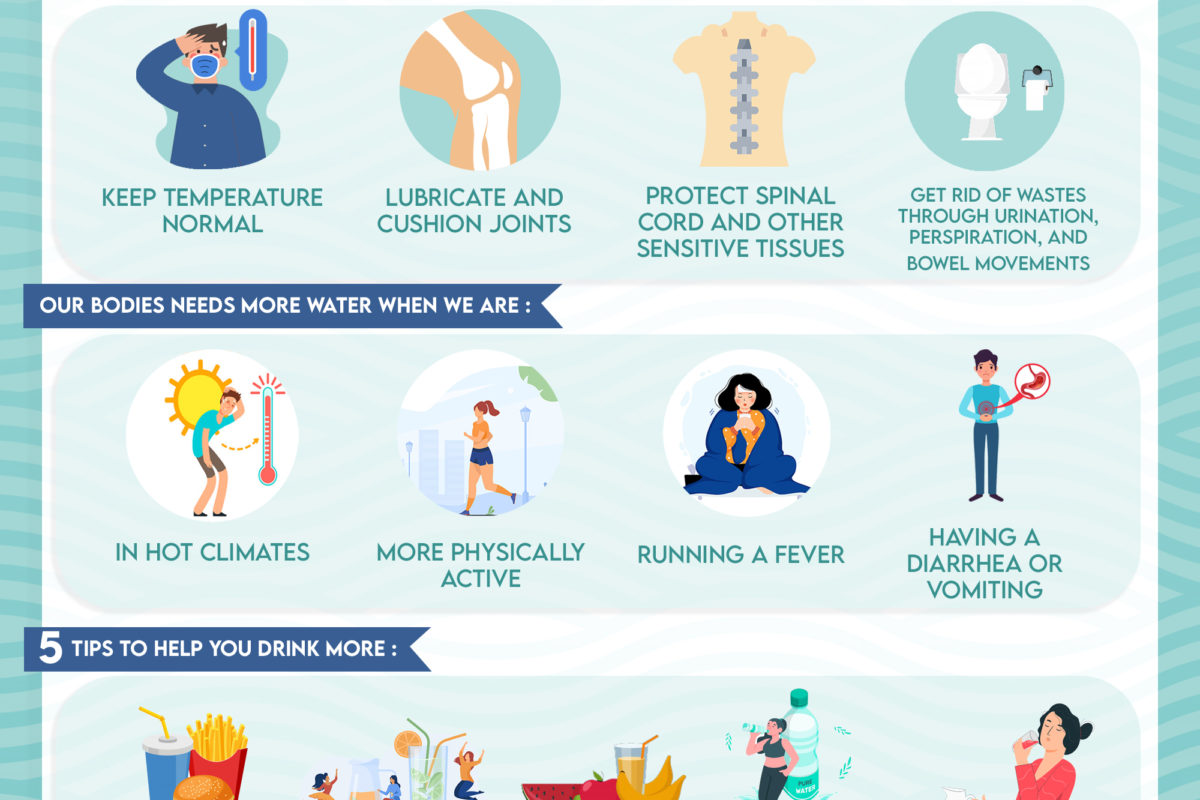
Water plays a significant role in our lives. All living things need water to survive. Apart from survival, water carries out many functions in our body such as maintaining normal body temperature, preserving tissues, spinal cords and joints by serving as cushions and lubricants, and facilitating waste expulsion through urine, sweat and bowel movement.

We need to increase our water consumption in order to regulate our daily water intake especially when we are in a hot climate, physically more active, down with a fever or having diarrhea and vomiting.

Here are 5 tips to help you drink more:

  1. Always carry a bottle of water with you in your car, at your desk or in your bag. This allows you to drink whenever you are feeling thirsty and keeps you hydrated at all times.
  2. Keep track & set a daily water intake goal. Aim to drink optimum amounts of water daily, between half an ounce of water for each pound you weigh.
  3. Replace other drinks with water. This will boost your health while reducing your calorie intake as other drinks such as sports drinks and sodas are often filled with added sugars which can be harmful to your health. Besides, replacing sugary drinks with water can potentially help you to lose weight.
  4. Increase intake of foods high in water. Some fruits and vegetables are high in water content such as celery, cabbage, lettuce, cucumber, watermelon and honeydew. Their high-water content will add to your hydration. In addition to high water content, these fruits and vegetables are rich in minerals, vitamins and antioxidants which can promote your overall health.
  5. Drink a glass of water once you wake up and before bed. This is an easy and effective way to increase your daily water intake and prevent dehydration.


Source: Centers for Disease Control and Prevention (CDC)

Obesity in adult

Obesity in adult

Obesity is a complex condition characterized by excess body fat which results in excessive weight.

The prevalence of being overweight and obese in Malaysia has increased by 29% and 14% respectively over the recent years.

There are many factors that can contribute to obesity. External factors are such as diet which is high in fat and sugar content that exceeds the daily requirement, lack of physical activity and exercise and consumption of certain medication like steroids, whereas, genetic factors are such as age, gender, family history and other internal health conditions.

Obesity has been associated with health changes and an increase in the prevalence of chronic diseases in the population which is contributed by alteration in dietary habits and a sedentary lifestyle. Besides, obesity can cause serious health implications both physically and psychologically. Physically it can cause an increase in the risk of getting diabetes, fatty liver, metabolic syndrome, sleep disorder and breathing difficulties. It also contributes to moderate risk of getting chronic diseases such as cardiovascular disease, hypertension, heart failure, gout, arthritis and certain types of cancer. Psychologically it can cause problems such as depression, lowered self esteem and other forms of social stigmatization.

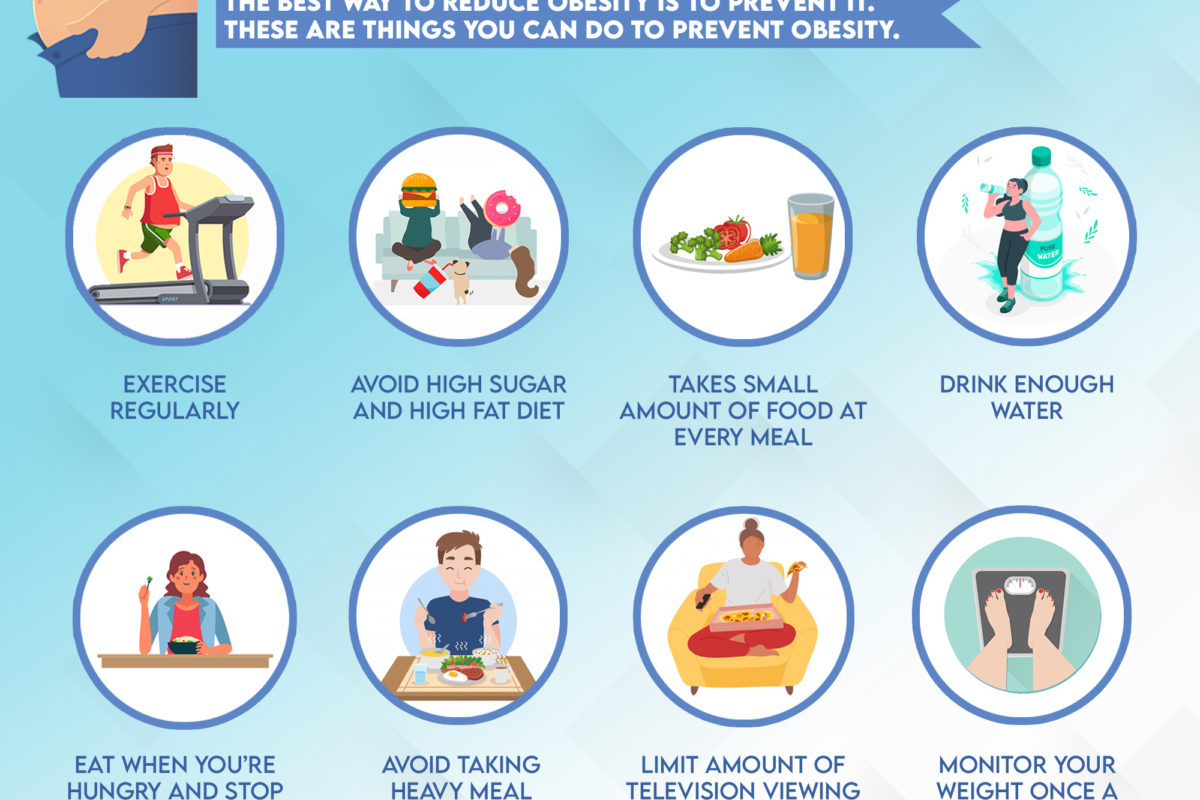
The best way to reduce obesity is by preventing it. Obesity can be prevented by exercising regularly, avoiding diet high in sugar and fat, taking food proportions that are small at every meal, drinking an adequate amount of water daily, eating only when you are hungry, avoiding heavy meals before bedtime or late night and monitoring your weight every once a week.

Healthy eating guide on Hari Raya

Healthy eating guide on Hari Raya

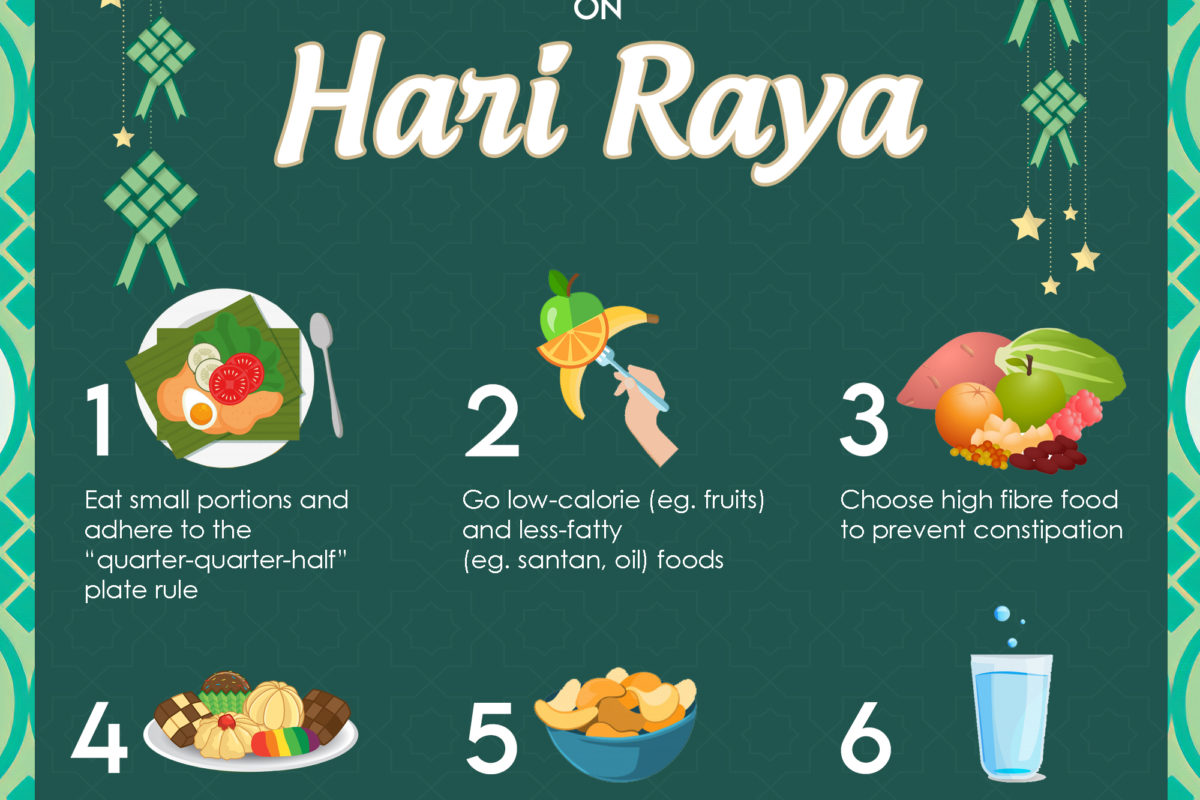
  1. Eat small portions and adhere to the “quarter-quarter-half” plate rule
  2. Go low-calorie (eg. fruits) and less-fatty (eg. santan, oil) foods
  3. Choose high fibre food to prevent constipation
  4. Limit the intake of sweet and high-fat food like dodol
  5. Limit consumption of food high in salt like kerepek (eg. banana, tapioca crisps)
  6. Drink plain water instead of soda or sweet drinks