Author Archives: superadmin-pantaipremier

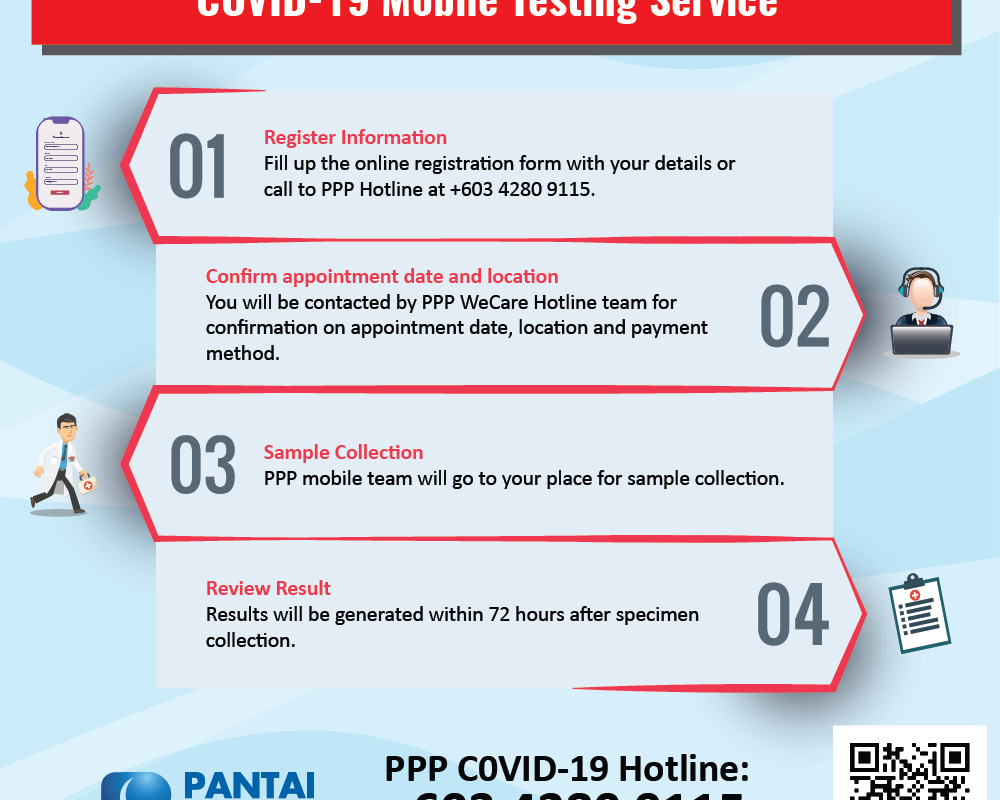
Pantai Premier Pathology COVID-19 Mobile Testing Service

HOW TO BOOK PANTAI PREMIER PATHOLOGY

COVID-19 MOBILE TESTING SERVICE:

1. ONLINE BOOKING

CLICK HERE FOR ONLINE BOOKING


2. CALL PPP HOTLINE

+603 4280 9115

Operation hours:

Monday – Friday (9AM – 5PM)  |   Saturday (9AM – 1PM)

3. WHATSAPP BOOKING

+6012 986 3797

Operation hours:

Monday – Friday (9AM – 5PM)  |   Saturday (9AM – 1PM)


FAQ MOH: www.shorturl.at/CSVWY  

InfoSihat: https://www.infosihat.gov.my

CPRC Hotline: +603-8881 0200 / +603-8881 0600 / +603-8881 0700

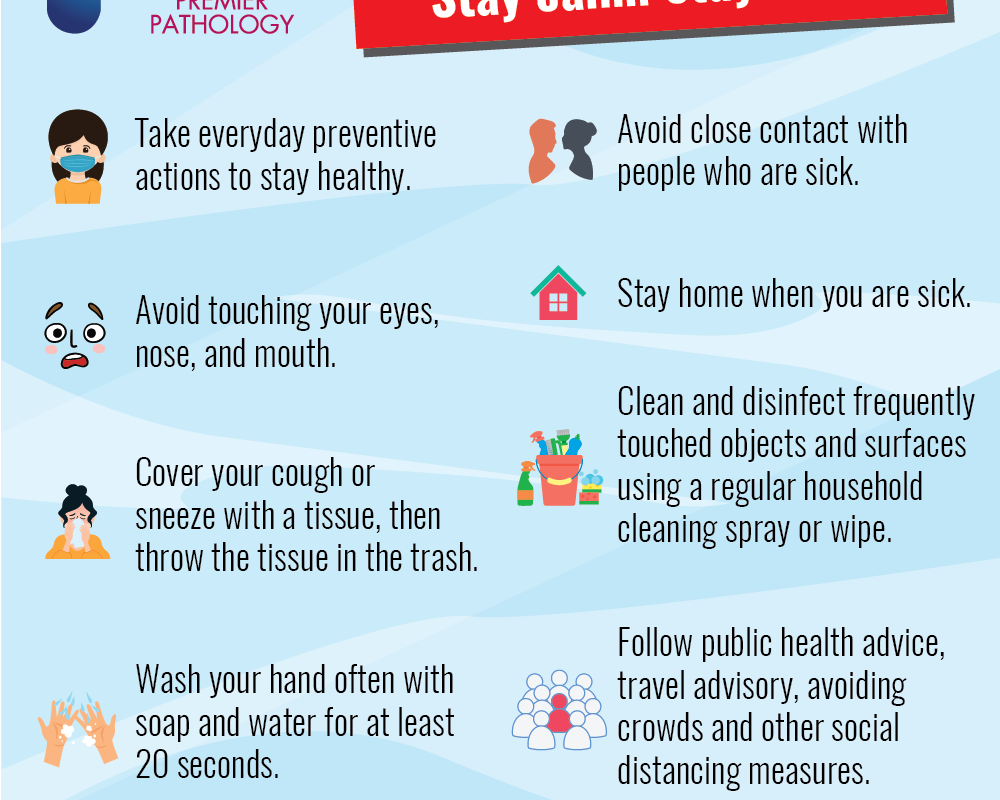
Protective measures to amid the ongoing Covid-19 coronavirus outbreak

Please do this to keep yourself and your family healthy:


  • Take everyday preventive actions to stay healthy.
  • Avoid close contact with people who are sick.
  • Avoid touching your eyes, nose, and mouth.
  • Stay home when you are sick.
  • Cover your cough or sneeze with a tissue, then throw the tissue in the trash.
  • Clean and disinfect frequently touched objects and surfaces using a regular household cleaning spray or wipe.
  • Wash your hand often with soap and water for at least 20 seconds.
  • Follow public health advice, travel advisory, avoiding crowds and other social distancing measures.


Stay calm. Stay safe.


Source: Ministry of Health (MOH)

PANTAI PREMIER PATHOLOGY OFFERS COVID-19 SAMPLE COLLECTION FROM HOME

PANTAI PREMIER PATHOLOGY OFFERS COVID-19 SAMPLE COLLECTION FROM HOME

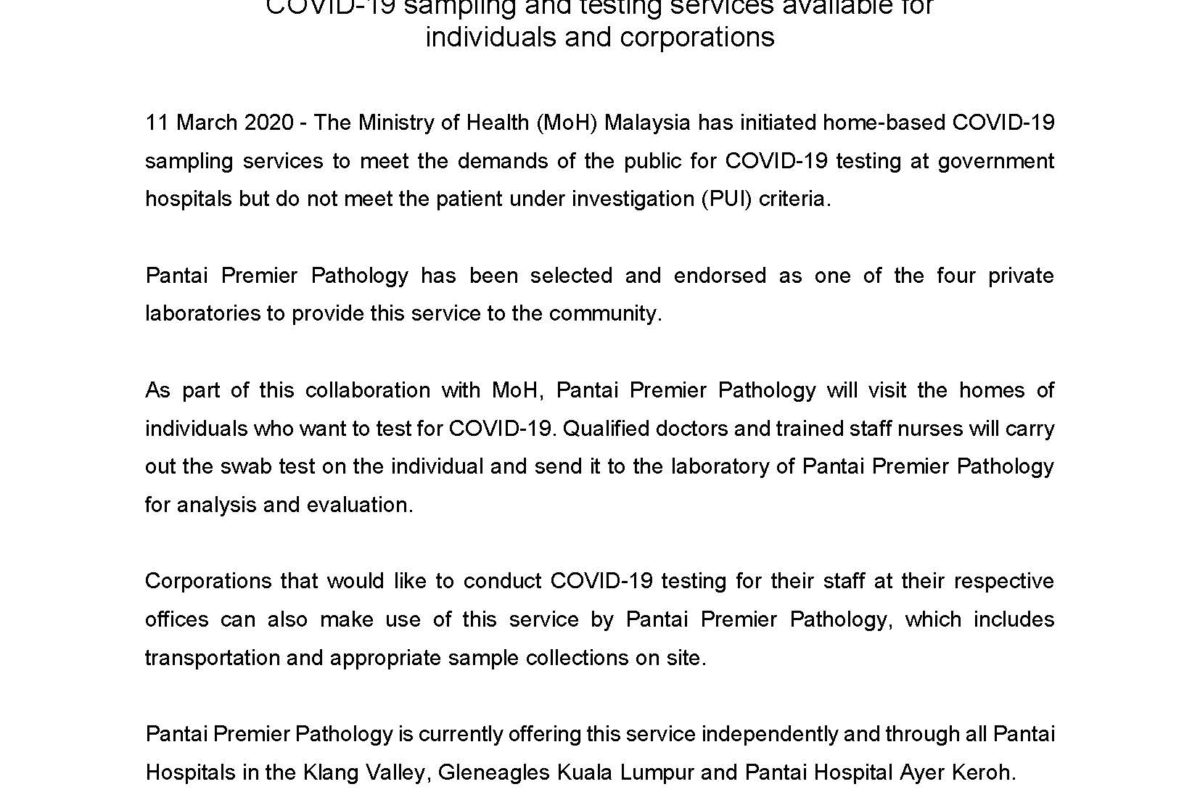
COVID-19 sampling and testing services available for

individuals and corporations


11 March 2020 – The Ministry of Health (MoH) Malaysia has initiated home-based COVID-19 sampling services to meet the demands of the public for COVID-19 testing at government hospitals but do not meet the patient under investigation (PUI) criteria.

Pantai Premier Pathology has been selected and endorsed as one of the four private laboratories to provide this service to the community.

As part of this collaboration with MoH, Pantai Premier Pathology will visit the homes of individuals who want to test for COVID-19. Qualified doctors and trained staff nurses will carry out the swab test on the individual and send it to the laboratory of Pantai Premier Pathology for analysis and evaluation.

Corporations that would like to conduct COVID-19 testing for their staff at their respective offices can also make use of this service by Pantai Premier Pathology, which includes transportation and appropriate sample collections on site.

Pantai Premier Pathology is currently offering this service independently and through all Pantai Hospitals in the Klang Valley, Gleneagles Kuala Lumpur and Pantai Hospital Ayer Keroh.

Plans are in the pipeline to expand this service to Gleneagles Hospitals and Pantai Hospitals in Penang, Perak and Johor. In addition, Pantai Premier Pathology will work with its GP partners to provide COVID-19 testing to all other communities across Malaysia.

For more information or to make an appointment, contact the Pantai Premier Pathology hotline at +603 4280 9115.


PANTAI PREMIER PATHOLOGY

Pantai Premier Pathology provides a diverse range of quality diagnostic and analytical laboratory testing services to medical practitioners. Referrals are received from a broad base of general practitioners and specialists from medical clinics, medical centres and large tertiary hospitals in Malaysia. Pantai Premier Pathology is an independent provider of medical laboratory services that has the capacity to cater to specialised and critical medical diagnoses that are generally required within the hospital environment and in emergencies. Pantai Premier Pathology has 28 laboratories throughout Malaysia, with more than 17 million tests being performed each year. Our mission is to continually improve our services to meet current and future healthcare needs. Our commitment is to keep abreast with the latest technology reflected in the ever-expanding comprehensive range of pathological tests being offered. Pantai Premier Pathology is part of Parkway Pantai, Asia’s largest integrated private healthcare group.


For more information, please visit:

Website:           www.premierpathology.com.my

Facebook:        Pantai Premier Pathology

Instagram:        premierpathology

Twitter:             @PPPathology

Linkedin:           Pantai Premier Pathology

A close look at CANCER in Malaysia

Exploring  Malaysia cancer burden in 2018

  • Numbers at a glance:
    • Total population – 32042455
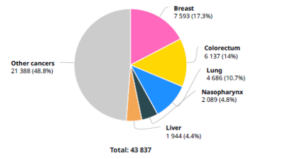
    • Number of new cases – 43837
    • Number of deaths – 26395


  • Number of new cases in 2018, both sexes, all ages


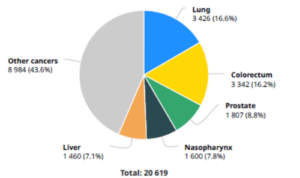
  • Number of new cases in 2018, males, all ages                                                                                             


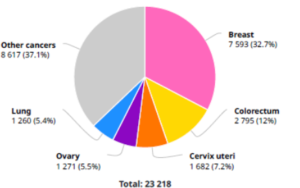
  • Number of new cases in 2018, females, all ages                                                                                           


Summary statistic 2018

Males Females Both sexes
Population 16 526 726 15 515 729 32 042 455
Number of new cancer cases 20 619 23 218 43 837
Risk of developing cancer before the age of 75 years (%) 14.2 14.8 14.5
Number of cancer deaths 13 937 12 458 26 395
Risk of dying from cancer before the age of 75 years (%) 9.4 8.2 8.8
Top 5 most frequent cancers excluding non-melanoma skin cancer (ranked by cases) Lung Colorectum Prostate Nasopharynx Liver Breast
Colorectum
Cervix uteri
Ovary
Lung
Breast Colorectum Lung Nasopharynx Liver


Reference:

World Health Organization. International Agency for Research on Cancer (IARC). Globocan 2018 – Global Cancer Observatory. Review at: https://gco.iarc.fr/today/data/factsheets/populations/458-malaysia-fact-sheets.pdf

Cervical Cancer Facts

CERVICAL CANCER: MALAYSIA STATISTIC REPORT (2018)1

  • Every year 1682 women are diagnosed with cervical cancer and 944 die from the disease.
  • 2nd : Cervical cancer ranks as the 2nd most frequent cancer among women between 15 and 44 years of age.
  • 3rd : Cervical cancer ranks as the 3rd most frequent cancer among women in Malaysia


HOW TO PREVENT OR DETECT CERVICAL CANCER EARLY?2

  1. Pap test (or Pap smear): Screens for cervical cancer. It does not screen for any other gynecologic cancer²


  1. Human papillomavirus (HPV) test: Looks for HPV— the virus that can cause precancerous cell changes and cervical cancer²


HPV BURDEN IN WOMEN1

  • HPV causes virtually 100% of cervical cancer cases
  • Worldwide, HPV16 and 18 (the two vaccine-preventable types) contribute to over 70% of all cervical cancer cases
  • After HPV16/18, the six most common HPV types are the same in all world regions, namely 31, 33, 35, 45, 52 and 58


CERVICAL CANCER: 9 WARNING SIGNS

  1. Unusual vaginal discharge or bleeding.
  2. Heavier & longer menstrual periods.
  3. Discomfort while urinating.
  4. Loss of bladder control.
  5. Pain during intercourse.
  6. Pelvic pain.
  7. Constant fatigue.
  8. Leg pain.
  9. Unexpected weight loss.


HPV DNA VS PAP SMEAR TESTING

  • A combination of HPV DNA and Pap Smear Testing had almost 100% sensitivity and negative predictive value. 3
  • One of study in German showed that HPV tests are more effective than Pap tests at discovering high-grade dysplasia. Individual Pap tests fail to detect half of all cases of dysplasia. HPV tests help to detect a lot more cases.4
  • Therefore, screening of both Pap test and HPV testing are essential for early detection of cervical cancer and screening of abnormal cervical cells.


CERVICAL CANCER SCREENING RECOMMENDATION

  • In Malaysia, all women who are, or who have been sexually active, between the ages of 30 and 65 years, are recommended to undergo Pap smear testing. If the first two consecutive Pap results are negative, screening every three years is recommended.5
  • HPV DNA-based testing may be done every five years as a primary screening strategy or combined with Pap test in women over 30 years of age for an interval / frequency of at least three to five years in women who are negative on both tests in the annual screening. 6


REFERENCES:

  1. Bruni L, Albero G, Serrano B, Mena M, Gómez D, Muñoz J, Bosch FX, de Sanjosé S. ICO/IARC Information Centre on HPV and Cancer (HPV Information Centre). Human Papillomavirus and Related Diseases in Malaysia. Summary Report 17 June 2019.
  2. What Should I Know About Screening?. Updated August 7, 2019. (Available at: https://www.cdc.gov/cancer/cervical/basic_info/screening.htm)
  3. Lörincz, A. T., & Richart, R. M. (2003). Human papillomavirus DNA testing as an adjunct to cytology in cervical screening programs. Archives of pathology & laboratory medicine127(8), 959-968.
  4. Institute for Quality and Efficiency in Health Care (IQWiG, Germany). Benefit assessment of HPV test in primary screening for cervical cancer. Final report; Commission S10-01.
  5. (2003).Clinical Practice Guidelines: Management of Cervical Cancer
  6. Health Technology Assessment Report: HPV DNA-Based Screening Test for Cervical Cancer